David Nakabayashi
8/1/2026-11/1/2026 Floor 1, Room 3
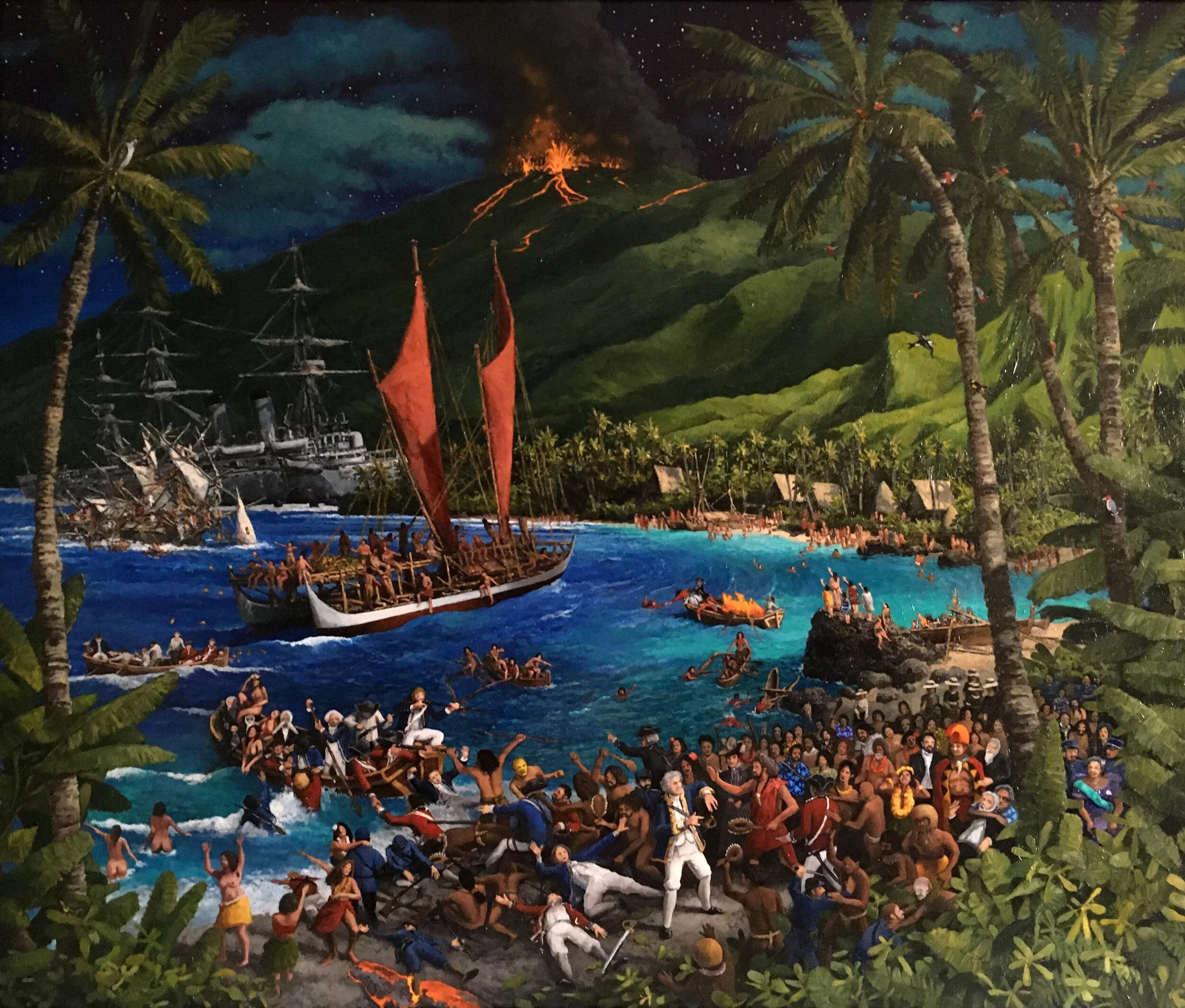
One-quarter of my blood is Native Hawai’ian—a quantum that grows increasingly rare. Since my parents’ divorce in 1970, when I was seven, I’ve had little connection to those islands, to my Hawai’ian father, or to his family. Instead, I grew up in the American Desert Southwest—a different kind of ocean—in an isolated city on the Mexican border, a different kind of island. Over the decades, I’ve visited Oʻahu only twice. I’ve met family scattered across California, Nevada, and Indiana. I’ve encountered just a handful of other Hawai’ians wherever I’ve lived. My identity as a Pacific Islander has been largely self-constructed—from fragments of tourism, novels, films, ancient mythology, brief encounters on Oʻahu, and a deep interest in music and chant complicated by my inability to speak the language. And always, the presence of the Kingdom of Hawaiʻi—illegally occupied for over 130 years—looms as a historical and personal weight. These scattered experiences and inherited absences shape the artworks in Ho’okolonaio—a Hawai’ian word meaning “to colonize,” particularly as seen from the perspective of the colonized. Through drawing, painting, and ceramic sculpture, this body of work is a deeply personal search for meaning: what it is to be Hawai’ian, to belong to a place that may no longer exist—if it ever did—and to reclaim even a fragment of what was lost.